
Drying Cannabis Without Losing Terpenes
You have spent months caring for, watering, training, and observing your plants – and finally, the time has come: harvest. But perhaps the most important part begins now. Because no matter how well your flowers have grown, if you dry them incorrectly, the result can be disappointing. The aroma fades, the flavor becomes flat, and the effect loses intensity. Approximately 70% to 80% of terpenes and aromatic compounds are lost during unprofessional drying.
The reason lies in the terpenes – those delicate, volatile aromatic compounds that give cannabis its characteristic scent and flavor. They evaporate at relatively low temperatures and are sensitive to light, oxygen, and air movement.
Proper drying is all about finding the right balance: removing enough moisture to stabilize the flowers while keeping as many terpenes intact as possible. Think of it as guiding the plant through its final phase in a controlled, deliberate way. In this article, you’ll learn step by step how to do exactly that.
What are terpenes, and why are they important?
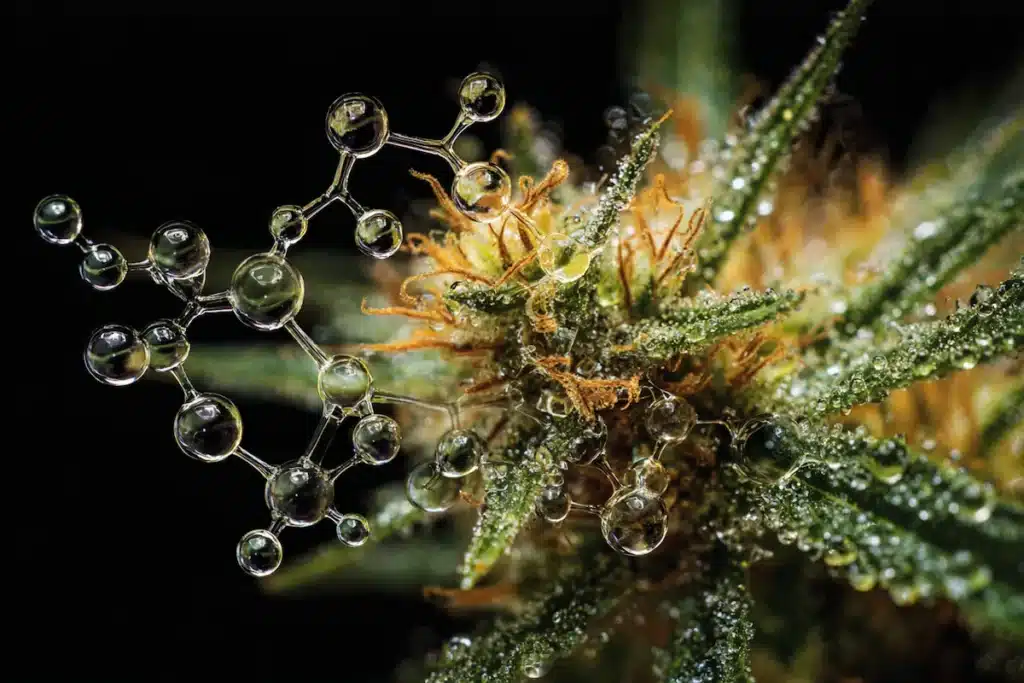
Terpenes are aromatic molecules produced in the tiny resin glands of the flowers – the so-called trichomes. They are responsible for the unique scent profile of each strain: fruity, earthy, lemony, spicy, or sweet. But terpenes are not only responsible for aroma – they also interact with cannabinoids like THC and CBD, influencing how cannabis affects you.
For example, limonene provides citrus freshness and an activating effect, while myrcene is more relaxing and earthy in aroma. If you are careless during drying, these exact compounds are lost – and with them a large part of the quality of your harvest.
Therefore, preserving terpenes = preserving quality.
The Most Important Factors in Drying Cannabis
To understand what matters during drying, let’s first look at the key factors that influence terpene content:
Temperature
Excessive temperatures are the greatest enemy of your terpenes. Many begin to evaporate at around 21°C. The ideal range is 15–20°C. The cooler (without risking mold), the better for aroma.
Humidity
Ideal relative humidity during drying is between 50% and 65%.
- If the air is too humid, mold forms easily.
- If it’s too dry, the flowers lose moisture too quickly – and with it, terpenes.
Air circulation
A gentle airflow prevents stagnant, moist air, but too much movement dries the surface too quickly and blows away aromas. A small circulation fan is sufficient – it should never blow directly onto the buds.
Light
Light – especially UV radiation – destroys terpenes and cannabinoids. The drying room should be completely dark or at least heavily dimmed.
Oxygen
Too much oxygen encourages oxidation. This matters mainly during storage, but even during drying, moderate air movement is better than constant exchange of fresh air.
Time
Quick drying is rarely good. Slow, even drying over 7–14 days ensures that moisture escapes in a controlled way and that delicate aromas are preserved.
Handling
Trichomes are extremely delicate, and every touch can damage them or introduce bacteria that may cause issues later during fermentation. Handle the flowers as gently as possible and avoid unnecessary contact. Even when wearing gloves, make sure to change them regularly to keep everything clean.
With standard drying, 70–80% of terpenes are lost.
Since most of the valuable terpenes are lost during common drying methods, the cannabis should be dried gently.
Step-by-Step Guide: Gentle Drying of Your Cannabis Buds
Step 1: Preparing for Harvest
Harvest your plants preferably early in the morning, when temperatures are lower, and the terpenes have not yet been affected by the sun or heat. Indoors, you can turn off the lights 24 hours beforehand to enhance this effect. Cut the plant at the base or separate individual branches containing flowers. Remove only the large fan leaves (pre-trimming), but leave as many small sugar leaves as possible – they protect the trichomes during drying.
Step 2: Setting Up the Drying Room
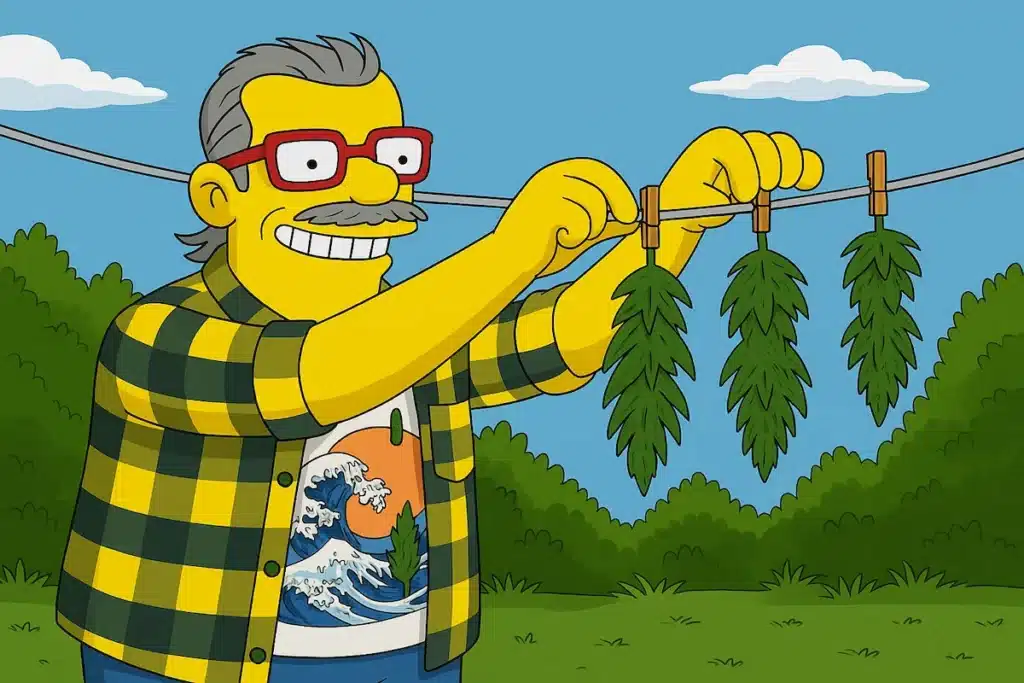
Prepare a dark, clean, and well-ventilated room.
- Temperature: 15–20°C
- Humidity: 50–65%
- Gentle circulation, but no direct airflow on the buds
- Ideally: a small fan and a temperature/humidity meter for monitoring
Hang the plants upside down or place individual branches on drying racks. Ensure that the flowers do not touch each other – this allows air to circulate evenly.
Step 3: Monitoring the Drying Process
Check the temperature, humidity, and condition of the buds daily. If you detect a light but intense aroma, everything is going well.
If the buds become too firm on the outside too quickly, reduce air movement or slightly increase humidity. If they smell musty or remain sticky-wet, humidity is too high – increase ventilation.
Step 4: Duration and Testing
After about 7–14 days (depending on room climate), the flowers are dry enough when:
- Small stems snap lightly when bent
- The buds feel dry on the outside, but still have some inner elasticity
At this stage, if everything was done correctly, the buds are slightly more moist inside than outside. If you place them in jars in this state, there is an increased risk of mold. My tip: place them in a cardboard box or paper bag for a few more days of finishing. The paper allows inner moisture to move outward, creating uniform humidity in the buds. Moisture should be between 55% and 65%.
Better too slow than too fast – this preserves terpenes and cannabinoids optimally.
Step 5: Transition to Curing
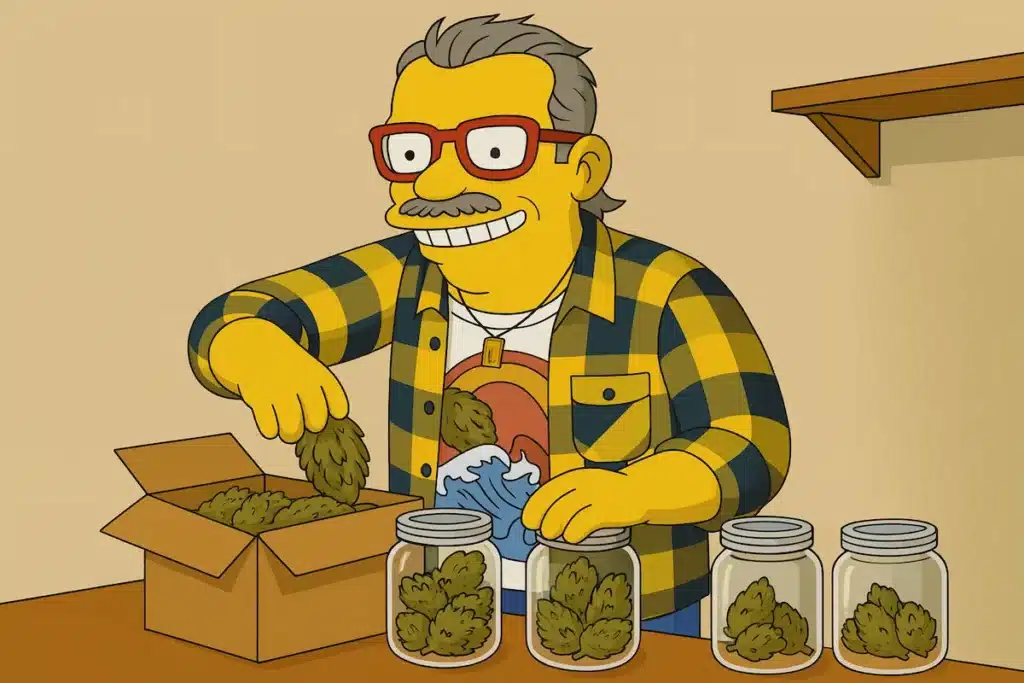
Once the buds are dry enough, the next crucial step begins: curing. During curing, the aromas continue to develop while residual moisture is evenly distributed.
Fill clean glass jars about three-quarters full with your buds. Store them cool (15–20°C), dark, and dry. During the first two weeks, open the jars once or twice a day for a few minutes to allow fresh air in and moisture to escape. After that, opening them every few days is sufficient. And avoid touching the material unnecessarily.
There is now a modern alternative to glass curing: so-called Fermbags.
Fermbags – Modern Helpers for Simple Fermentation
Fermentation bags, often called Fermbags, are airtight, flexible plastic bags designed specifically to conduct biological fermentation processes in a clean, controlled manner with minimal contamination risk. They were originally developed for food and plant processing; today, they are also used in horticulture, microbiology, and even cannabis cultivation.
How Do Fermbags Work? – The Principle
Their functionality relies on displacing oxygen and controlling gas release:
- During fermentation, microorganisms – such as lactic acid bacteria or yeasts – produce CO₂.
- Fermbags have an integrated one-way valve (similar to an airlock) that allows CO₂ to escape.
- At the same time, no air can enter the bag, preventing oxidation and mold formation.
- This creates a stable anaerobic environment, ideal for fermentation.
Most high-quality bags are made of multi-layer plastic that is highly gas-resistant yet flexible. This prevents oxygen from diffusing through the bag walls.
Why Ferment in a Bag?
- No heavy equipment – no jars, fermentation vessels, or expensive lid systems
- Very low contamination rate, since the bag stays closed
- Space-saving – ideal for small rooms
- Low cost – bags are inexpensive and often reusable
- High safety – no overpressure, no risk of jars exploding
Step 6: Optimal Humidity in the Jar
Inside the jar, relative humidity should be around 55–62%. You can use small humidity packs (e.g., Boveda) to keep levels stable.
After about 4–6 weeks of curing, aroma and flavor are fully developed, and you can store the buds long-term without aroma loss.
Step 7: Long-Term Storage
Store your buds best in airtight, dark glass containers. Plastic is unsuitable because it builds static and allows terpenes to diffuse.
Keep them cool, dark, and dry. Extreme temperatures, direct sunlight, or fluctuating humidity degrade terpenes and cannabinoids over weeks and months.
The most common mistakes when drying cannabis
Even small oversights can significantly reduce the quality of your harvest. Avoid these typical mistakes:
- Too fast drying: If flowers lose moisture too quickly, they have no time to mature evenly – the final product tastes harsh and unbalanced (black ash when burned).
- Too high humidity: Levels above 65% easily cause mold and a musty smell.
- Too much airflow: A fan blowing directly on the buds removes not only moisture but also terpenes.
- Light exposure: UV destroys terpenes and cannabinoids – the drying room must remain dark.
- Too much handling: Every contact can break trichomes and release aromas.
- Sealing jars too early during curing: If buds are still too moist, condensation forms – an ideal environment for mold.
- Over-drying: Excessively dry buds feel straw-like and lose their full aroma.
- Lack of monitoring: Without a hygrometer or thermometer, you can’t control the process. Small fluctuations make the difference between success and disappointment.
Special techniques for maximum terpene preservation
If you want to perfect your drying process, here are some additional methods to extract the best possible quality from your flowers:
Cold Drying
A particularly gentle approach is drying at 12–15°C. It lengthens the process to up to three weeks but preserves considerably more terpenes and yields a more intense aroma.
Whole-Plant Drying
Instead of cutting individual branches, you can hang entire plants upside down. This slows and evens the drying process, improving aroma.
Complete Darkness
Ensuring the drying room is entirely dark significantly reduces terpene degradation. Even faint light can affect quality over days and weeks.
Freeze-Drying (for professionals)
With specialized equipment, cannabis can be freeze-dried. Moisture is removed under vacuum while terpenes remain largely intact. This method is technically advanced but ideal for very high-quality buds.
Gentle Post-Dry Trimming
Trim buds only after drying to avoid unnecessary damage to delicate trichomes. Post-dry trimming preserves noticeably more resin and aroma.
Why the Effort Is Worth It
If you dry your buds slowly and carefully, you will notice the difference immediately:
- The scent is more intense and defined.
- The flavor when smoking or vaporizing is smoother and more balanced.
- The effect feels “fuller” – because terpenes enhance the entourage effect.
- And finally: your buds remain fresh and aromatic for months.
In short, proper drying determines the character of your harvest.
Summary
Drying your cannabis flowers is not just a simple intermediate step – it is an art. If you want to preserve terpenes, follow these principles:
- Temperature: 15–20°C
- Humidity: 50–65%
- Light: complete darkness
- Airflow: gentle, never direct
- Duration: 7–14 days
- Curing: at least 4 weeks at 55–62% rH
- Storage: cool, dark, airtight
The more patience and control you apply, the more intense, aromatic, and high-quality your buds will be.